Kunzite
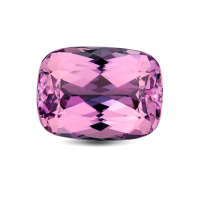
Collectors love kunzite for its color range, from delicate pastel pink to intense violetish purple.
Kunzite Description
Kunzite has two perfect cleavage directions. It’s pleochroic, with the best color visible when you look down the length of the crystal. Cutters keep these factors in mind when they orient gems for finishing. They might also cut a kunzite deep to emphasize its pink to violet color.
It is not unusual to find kunzite in large sizes. The Smithsonian Institution houses a faceted heart-shaped kunzite that weighs 880 carats.
Kunzite can be irradiated and then heat-treated to enhance its color. Both treated and natural color in kunzite can fade with exposure to heat and bright light.
Gemstone Details
- Mineral: Spodumene
- Chemical composition: LiAlSi2O6
- Color: Pink-violetish purple, light-intense
- Refractive index: 1.660 to 1.676
- Birefringence: 0.014 to 0.016
- Specific gravity: 3.18
- Mohs hardness: 6.5 to 7.0
Birthstones and Anniversaries
Some consider kunzite to be an alternate birthstone for February.
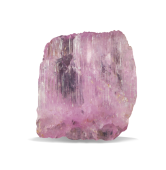
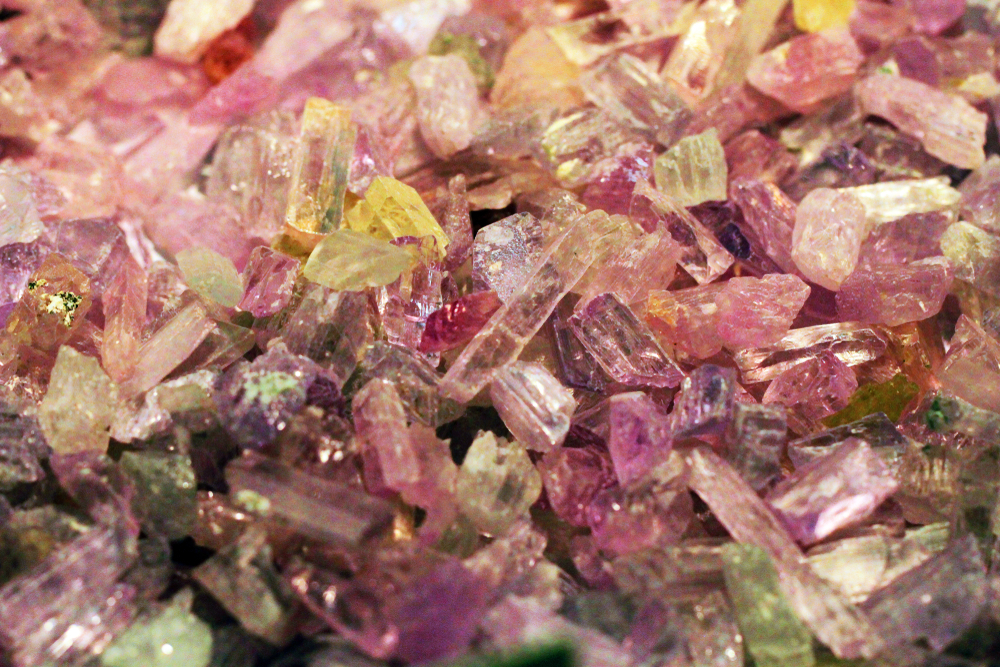
Kunzite Gemstone as rough
Kunzite History and Lore
Kunzite is a relative newcomer to the array of colored stones available for use in jewelry. As the story goes, specimens of an as-yet-unidentified pink crystal were found in San Diego County, California, and sent to Tiffany & Co.’s mineralogist, George Frederick Kunz. The year was 1902. Kunz was able to confirm that the crystals were, in fact, spodumene, but the previously unrecognized color made the find a new variety of the mineral.
Charles Baskerville, a chemistry professor at the University of North Carolina and later the City College of New York, subsequently named kunzite in honor of George Kunz in 1903. In the years since, kunzite has proven to be a highly desirable gem. Occurring in attractive shades of pink to violet, kunzite crystals are also often large, with relatively few inclusions. Though difficult to cut due to its two cleavage directions, it lends itself to lovely finished gems that show magnificently in fine jewelry.
Few people outside the gem industry realize the true nature of a gemstone’s journey from the mine to the jewelry-store counter. Whether the gem is being offered to consumers at a traditional jewelry store, an internet shopping site, or a television broadcast, the journey always involves a great deal of effort. Tons of earth and countless hours of labor are needed to bring a gem from mine to market.
Facts about Kunzite Gemstone
AFFORDABLE
In spite of its rarity and beauty, kunzite can be quite affordable because it’s relatively unknown.
BLADES
Kunzite is monoclinic and its crystals often take on a blade-like shape. Its rough form is dramatic.
PEGMATITES
Kunzites are found in pegmatite deposits, often along with tourmaline, beryl, and other gems.
Quality Factors
COLOUR
Color is kunzite’s most important value factor. The more vivid the color, the higher the value.
CLARITY
Kunzite is usually very clean, so inclusions that affect its transparency can reduce the gem’s value.
CUT
Skilled cutters can bring out kunzite’s beauty despite challenges from its two cleavage directions.
CARAT WEIGHT
It’s not unusual to find kunzite in large sizes. This is an extremely large example that weighs 648.10 carats